Bishop Martin Church of England Primary School
English
At Bishop Martin CE Primary School our Guiding LIGHT Curriculum is built around the National Curriculum, enriched to reflect the children and community we teach.
We strive to provide a curriculum that is underpinned by our Christian Values, which are embedded in the life and work of our school, and to allow all our children to 'Let their Light Shine'.
Let Your Light Shine Before Others So They May See Your Good Deeds' (Matthew 5.16)
Our Vision
At Bishop Martin CE Primary School, we believe that language is at the heart of learning. Through reading, writing, speaking and listening, we aim to develop confident communicators who can express themselves clearly, creatively and purposefully.
We strive to foster a love of language and literature, providing children with rich opportunities to read widely, write for a range of purposes and develop the skills needed to become lifelong learners. Our English curriculum is carefully designed to ensure that all children make excellent progress and develop the knowledge and skills required for future success
Intent
At Bishop Martin CE Primary School, we believe that language is at the heart of learning. Through reading, writing, speaking and listening, we aim to develop confident communicators who can express themselves clearly, thoughtfully and purposefully.
We recognise that strong literacy skills are built upon secure foundations. Therefore, our English curriculum places a significant emphasis on the development of foundational skills, including spoken language, phonological awareness, phonics, handwriting, spelling, sentence construction and vocabulary development. These essential building blocks enable children to become fluent readers and confident writers.
Through high-quality texts, rich vocabulary experiences and carefully sequenced teaching, children develop the knowledge and skills required to read with fluency, understanding and enjoyment. Reading and writing are taught as interconnected processes, allowing children to draw upon the language, structures and ideas they encounter as readers to enhance their own writing.
Our curriculum is designed to progressively develop children's transcriptional and compositional skills. Through explicit teaching, oral rehearsal and opportunities for purposeful application, pupils learn to write with increasing accuracy, stamina and independence. We aim for all children to develop a secure command of spelling, grammar and punctuation, enabling them to communicate effectively for a range of audiences and purposes.
By nurturing a love of literature and providing children with the foundational skills needed for success, we strive to ensure that every child leaves Bishop Martin as a confident reader, an effective writer and a lifelong learner.
Implementation
How do we deliver our Reading Curriculum?
Reading is a fundamental part of our curriculum and underpins learning across all subjects. We aim to develop fluent, confident readers who read for both pleasure and purpose.
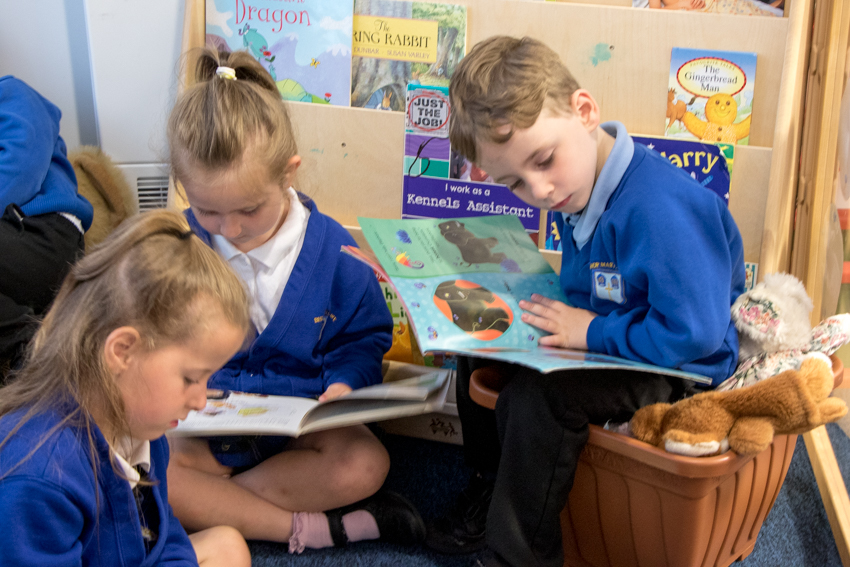
Children are exposed to a wide range of high-quality texts, including fiction, non-fiction and poetry. Through whole-class reading, story time and independent reading opportunities, pupils develop comprehension skills, vocabulary and a love of books.
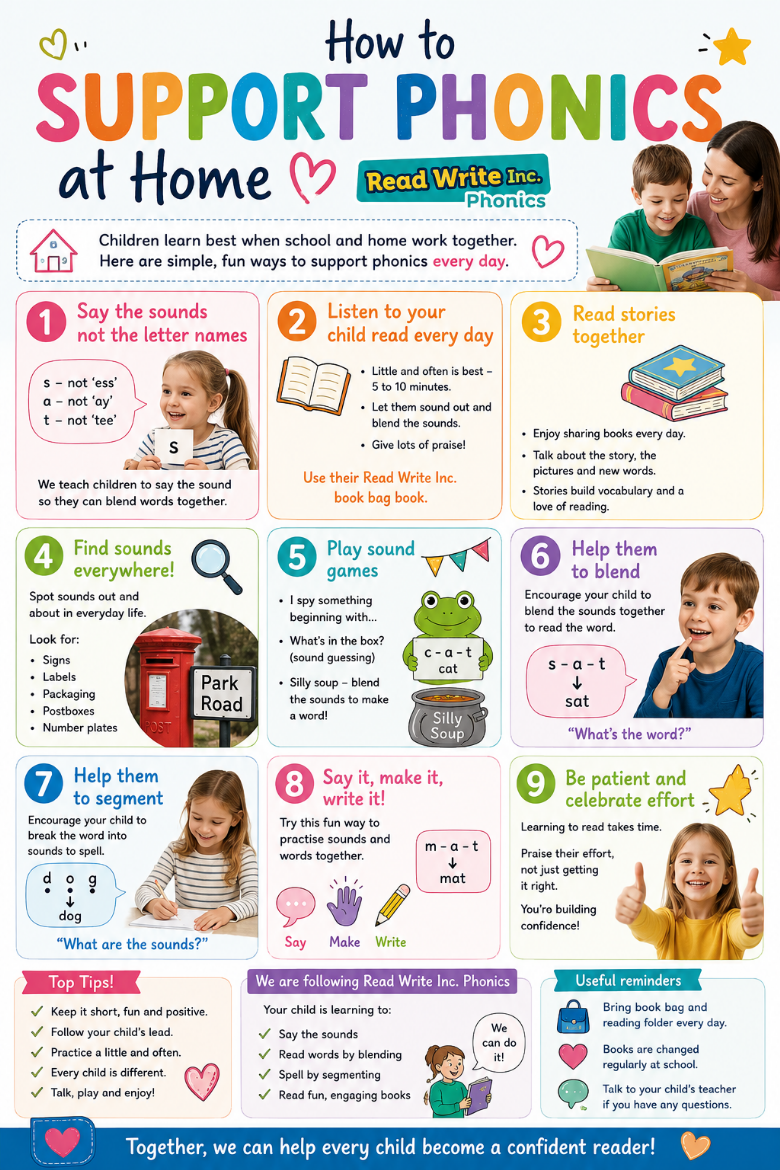
We encourage children to read regularly at home and work closely with families to promote positive reading habits.
Phonics
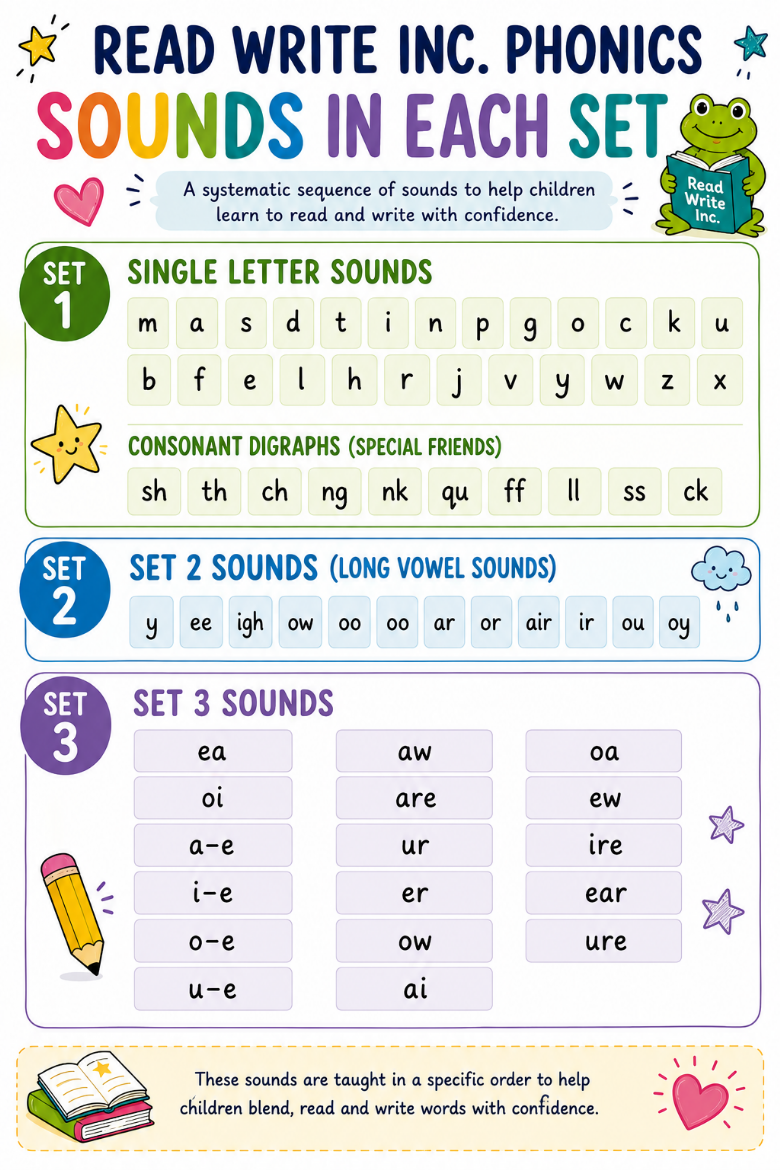
At Bishop Martin CE Primary School, we teach early reading through Read Write Inc. Phonics.
Read Write Inc. is a systematic and rigorous phonics programme that teaches children to:
- Read accurately and fluently.
- Develop strong word-reading skills.
- Spell words confidently.
- Develop a love of reading.
Children participate in daily phonics lessons where they learn sounds, practise blending for reading and segmenting for spelling. Regular assessment ensures that children receive teaching matched closely to their stage of development.
How do we deliver our Writing Curriculum?
We want all children to become confident, independent writers who can write effectively for a range of audiences and purposes.
Writing is taught through high-quality texts and engaging experiences. We use Ready Steady Write as our writing curriculum to provide carefully sequenced units that develop children's vocabulary, grammar, punctuation and composition skills.
Alongside this, children are supported through consistent teaching approaches drawn from Read Write Inc., including:
- Oral rehearsal
- My Turn, Your Turn
- Hold a Sentence
- Dictated Sentences
- Think Out Loud
- Editing and improving
Children are taught to follow our writing process:
Say it
Rehearse it
Write it
Read it
Check it
This approach helps children develop confidence, accuracy and independence as writers.
Handwriting
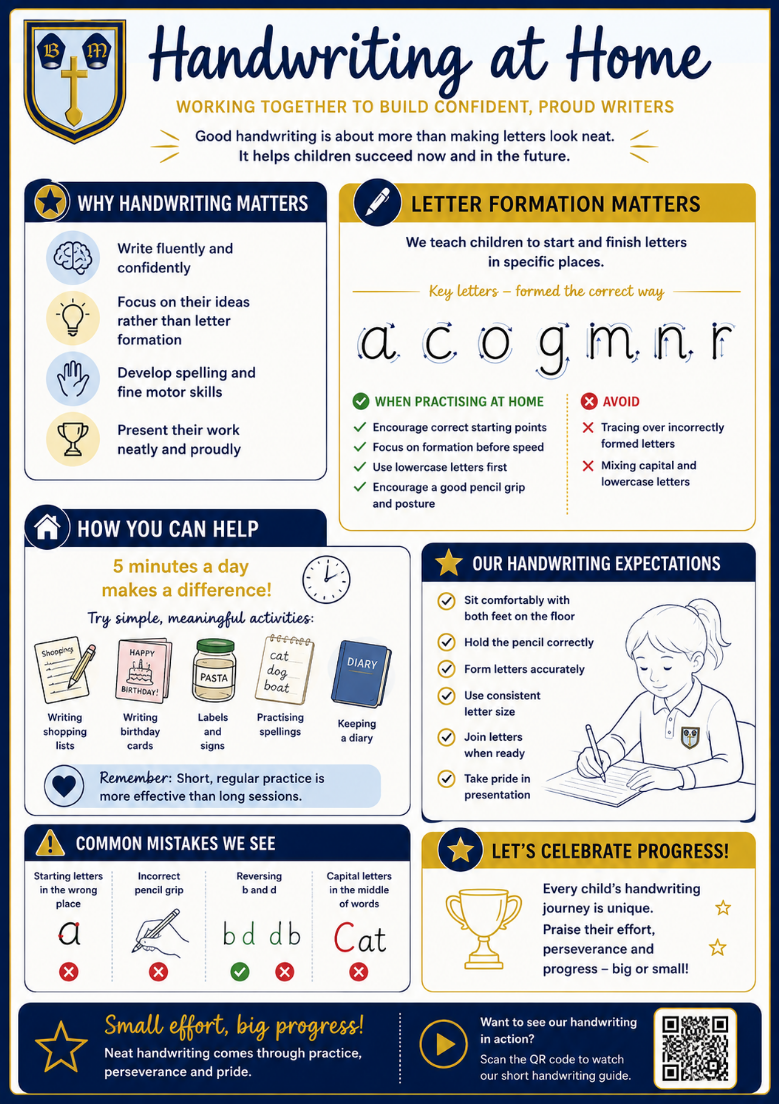
At Bishop Martin CE Primary School, we recognise that handwriting is a fundamental skill that underpins successful writing. We believe that children should take pride in the presentation of their work and develop a fluent, legible and efficient handwriting style that supports them to communicate their ideas effectively.
Handwriting is taught explicitly and progressively across the school. From the early stages of mark making and letter formation in EYFS, through to the development of a fluent joined handwriting style in Key Stage Two, children are provided with regular opportunities to practise and refine their handwriting skills.
We place a strong emphasis on:
- Correct letter formation
- Pencil grip and posture
- Consistent letter sizing and orientation
- Accurate spacing between words
- Presentation and pride in written work
- Developing fluency and stamina
Handwriting is taught through regular practice and is reinforced across all areas of the curriculum. High expectations for presentation are shared by all staff, ensuring a consistent approach throughout the school.
By developing secure handwriting skills, we enable children to focus more fully on the content of their writing, supporting both transcriptional fluency and written composition.
Spelling, Grammar and Punctuation
Spelling, grammar and punctuation are taught both discretely and within meaningful writing contexts.
Children build their knowledge progressively from EYFS to Year 6 through carefully planned teaching sequences. New skills are revisited regularly and applied within writing so that children can use them accurately and independently.
Our spelling curriculum follows the National Curriculum expectations and is supported through Ready Steady Spelling.
Supporting Your Child at Home
Parents can support English learning by:
- Reading regularly with their child.
- Practising phonics sounds and tricky words.
- Encouraging children to talk about books.
- Supporting spelling practice.
- Providing opportunities for writing at home.
Regular reading and discussion are some of the most effective ways to support children's language development.